The History of Rock Community Fire Protection District
Roots
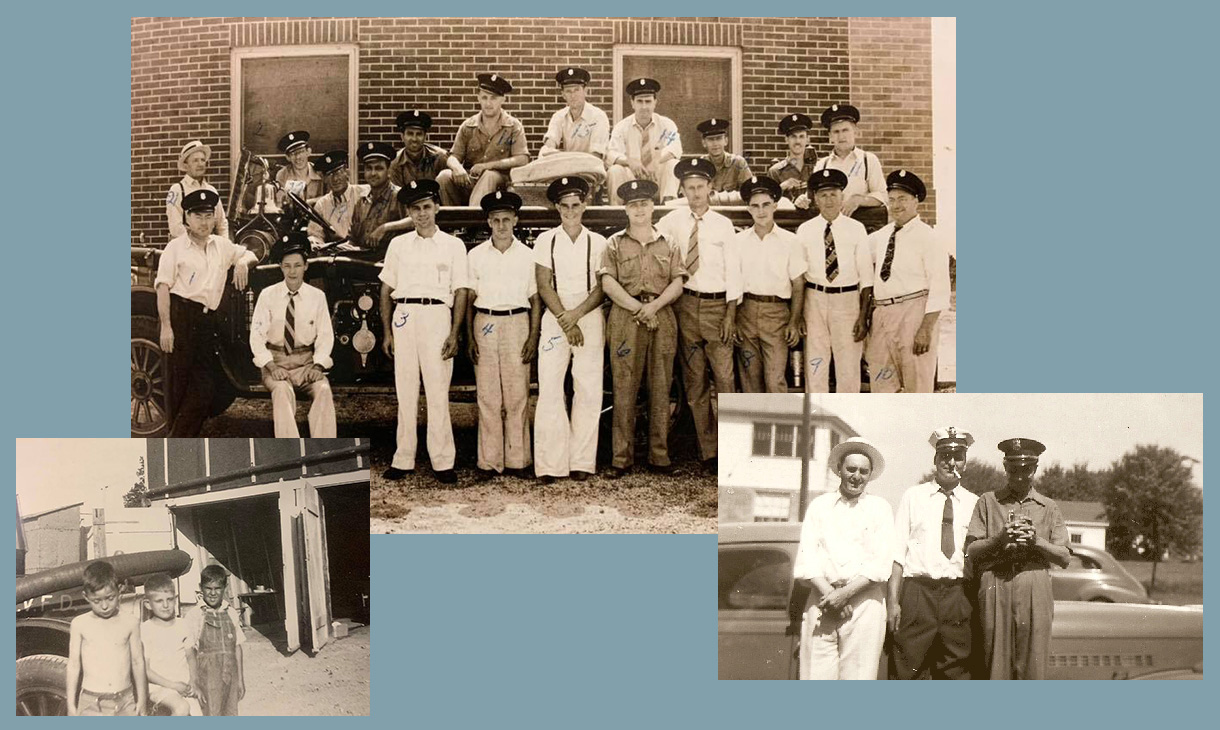
The Rock Community Fire Protection District (RCFPD) traces its roots to December 1939, when the Brockhaus Tavern fire prompted local citizens to organize fire protection for the area. Before that time, no formal fire service existed. Those residents formed the Rock Community Volunteer Fire Association (RCVFA), funding early operations through a “fire tag” subscription system and community fundraisers to purchase their first used truck and hose. In the decades that followed, the department continued to grow—purchasing its first new engine and building its first permanent fire station.

1960s and 1970s
The 1960s and 1970s marked a period of modernization and expanding community needs. As Interstate 55 construction began and the area grew, the department introduced new life-saving tools such as the Emerson resuscitator and formalized training through regular training nights. In the 1970s, voters approved the formation of the fire district, creating stable tax-based funding and enabling the hiring of the first full-time employees and a paid Fire Chief. During this era, the district expanded operations by constructing Station #2 and launching a paramedic program to provide advanced medical care.
Late 20th Century
In the late 20th century, RCFPD continued to enhance its capabilities through advances in technology, staffing, and specialized rescue resources. The 1980s brought key operational improvements, including the district's first aerial apparatus. The 1990s saw further expansion with the addition of field 12-lead ECG capability, modern computing systems, and a heavy rescue truck. This period also included defining moments that shaped the organization and reinforced its commitment to safety and service: the Great Flood of 1993, which drew a visit from President Clinton, and the district's first line-of-duty death.
2000s and Beyond
In the 2000s and beyond, the district grew alongside the community, including the construction of Stations #4 and #5 and staffing improvements supported by a federal SAFER grant. RCFPD continued expanding prevention, preparedness, and emergency response services to meet changing community needs. Despite economic challenges in the 2010s and the operational impacts of the COVID-19 pandemic, ongoing community support has helped the district remain focused on training, readiness, and continuous improvement.